
Why the A’s Future Home is a Next Level Ballpark
When you strip away the renderings discourse (“love it,” “hate it,” “looks like an air fryer”), what exactly are the A’s building on the Vegas Strip, and what does it mean for baseball?
Here’s the busy-adult version of the story.
1. Where things stand right now
Relocation is officially happening.
MLB owners unanimously approved the A’s move from Oakland to Las Vegas in November 2023, with the new ballpark targeted to open for the 2028 season on the site of the old Tropicana hotel at Tropicana & Las Vegas Blvd.The Tropicana is gone, and construction has started.
The Tropicana closed in April 2024 and was imploded in October 2024. Site prep followed, and a formal groundbreaking ceremony for the new ballpark took place on June 23, 2025.The project just got more expensive.
Initial estimates ranged from $1.5 to $1.75 billion. Updated projections now peg the stadium cost at about $2 billion, with an official capacity of 33,000 seats, which would make it the smallest park in MLB by attendance but one of the priciest to build.The team is in limbo until then.
After leaving Oakland, the club is playing at Sutter Health Park in West Sacramento for at least three seasons starting in 2025, with select games in Las Vegas Ballpark in 2026 to start building a local presence.
So: the move is approved, the Trop is rubble, ground has been broken, and the clock is ticking toward 2028.
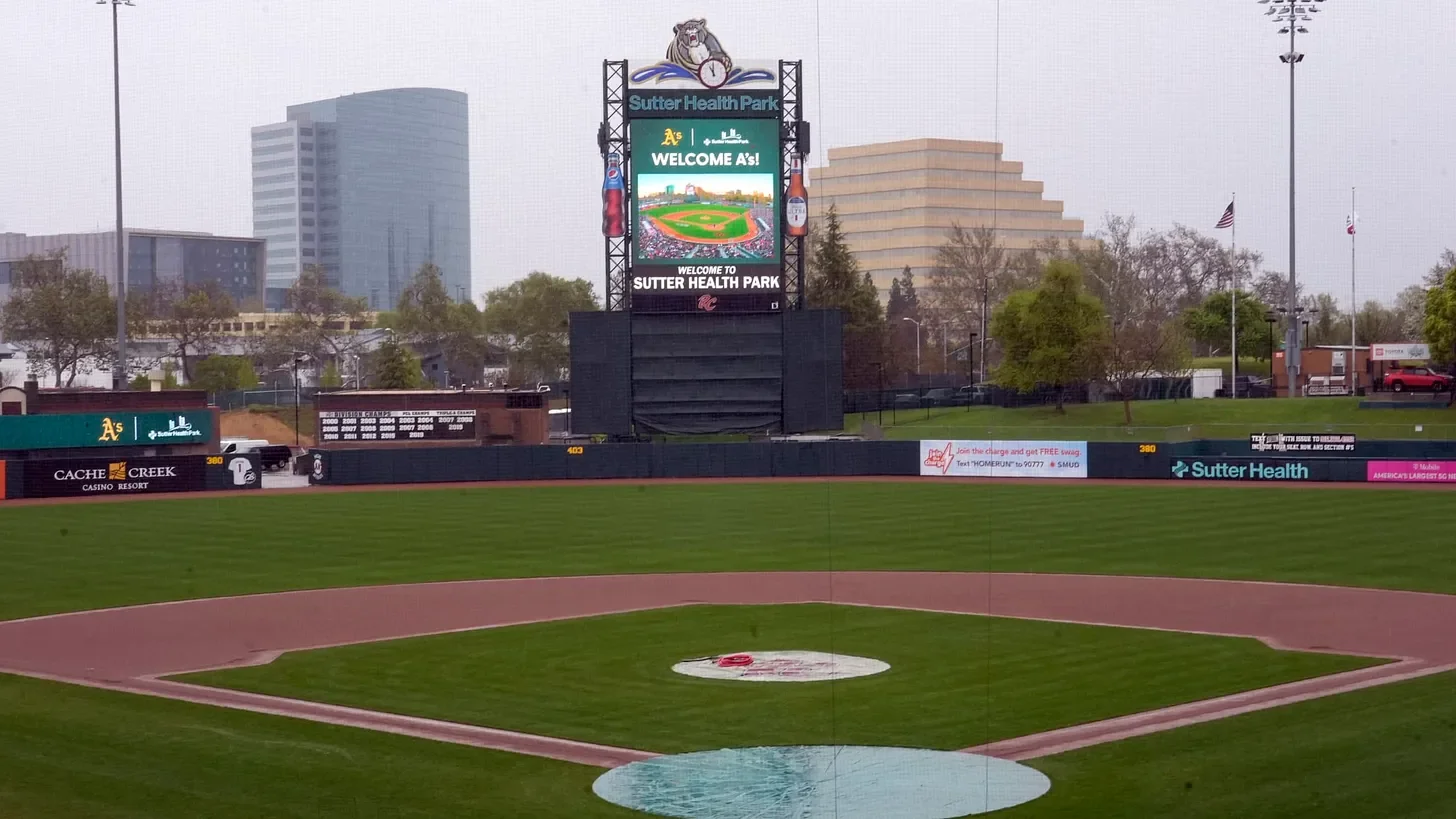
Sutter Health Park | MLB.com
2. What is this stadium actually supposed to look like?
The A’s new home is officially called “New Las Vegas Stadium” for now. The design team is heavy-hitting: Bjarke Ingels Group (BIG) as lead architect and HNTB handling sports/hospitality.
Key design features, in plain English:
A fully indoor, climate-controlled ballpark
Early talk of a retractable roof faded; updated renderings show a fixed roof, but one that’s heavily sculpted and perforated to let in controlled light. The roof has five overlapping panels inspired by baseball pennants, opening visually toward the north so you get views up the Strip while avoiding the brutal southern sun.
The giant glass “window to the Strip”
Behind the outfield will sit what’s billed as one of the largest cable-net glass windows in North America, framing the Tropicana/Las Vegas Blvd. corner in the backdrop. Think of it as baseball with a built-in Vegas postcard shot.
Smallest capacity in MLB — on purpose
Capacity: ~33,000
Layout: tiered upper and lower bowls, very tight foul territory, stacked bullpens just beyond the left-field wall. The goal is to bring fans closer to the field than a typical modern park and create a deliberately intimate atmosphere.
In other words: fewer cheap nosebleeds, more “every seat feels involved.”
Giant scoreboard, heavy on spectacle
Renderings call for an 18,000-square-foot video board, which would make it the largest in MLB, all under a roof that gives the team full control over lighting and in-game production.
Part of a larger casino-resort campus
The ballpark itself sits on about 9 acres of the old Tropicana site, with hotel towers (over 3,000 rooms) and other resort elements planned around it by Bally’s. The whole thing plugs directly into the Strip, with the MGM Grand monorail stop and pedestrian traffic essentially feeding into the stadium district.
The intent here is clear: this is not just a baseball park with a casino next door; it’s one piece of a larger Las Vegas entertainment machine.

Las Vegas Ballpark Construction Rendering | The Athletics
3. How the money works (and why teachers sued over it)
The basic funding stack
Total stadium cost: now projected around $2 billion.
Public contribution: $380 million in state/county support via SB1, primarily through bonds and tax credits.
Private money:
A’s owner John Fisher and his family have pledged roughly $1 billion in equity.
The rest comes from bank financing (U.S. Bank, Goldman Sachs) and private partners, plus long-term revenue streams like naming rights and concessions.
The teachers’ union fight
The public-funding piece triggered a fierce backlash from the Nevada State Education Association and its “Schools Over Stadiums” campaign. Their two main moves:
Ballot referendum (2023):
They tried to put the stadium funding package to a statewide vote. A Nevada judge tossed the petition in November 2023, citing technical problems with the language.Legal challenge (2024):
The union later sued to overturn the funding law itself, arguing it violated the state constitution. In September 2024, a judge dismissed the case, ruling the union lacked standing. Nevada’s Supreme Court also rejected a related attempt to force the funding onto the 2024 ballot.
Bottom line: barring some wild new twist, the $380 million in public money is locked in, and the financing path is considered secure enough that state and team officials keep saying the project is “on track” for 2028.
4. Why the design is so polarizing
When the A’s and BIG released the updated renderings in March 2024, reaction was… mixed.
Supporters loved the bold, futuristic look and the idea of a fully climate-controlled ballpark that still felt connected to the Strip.
Critics said the stadium looked like everything from a “space helmet” to a “giant Roomba,” and some Oakland fans saw the design as a symbol of a franchise chasing spectacle over roots.
From a practical standpoint, there are three big bets built into the design:
Vegas as an MLB destination city
The stadium is intentionally smaller and more premium, banking on:Strong demand from locals
A constant churn of out-of-town visitors who decide to hit a game like they might a show
Indoors > outdoors in 110° heat
Allegiant Stadium (Raiders) proved Vegas can support a domed venue as a year-round events space. The A’s park follows that model, emphasizing fan comfort with shade, AC, and short walks from Strip hotels.Multi-event utility
The stadium is being pitched not just for baseball but for things like the National Finals Rodeo, major concerts, and other large events that want the Strip location plus climate control.
If it works, the building could be busy far beyond 81 home dates. If it doesn’t, Vegas ends up with an expensive, oddly sized arena that’s great for a few things and awkward for everything else.

Las Vegas Ballpark Construction Rendering | The Athletics
5. What this means for the A’s, on and off the field
A reset of the franchise’s physical identity
The A’s haven’t had a new, baseball-only stadium of their own since Shibe Park opened in 1909—every home since then has either been shared or heavily modified.
Vegas gives them:
A modern, TV-friendly setting
A smaller, potentially louder home park that can hide low attendance
A chance to rebrand from the ground up as the Las Vegas Athletics
A test of whether Vegas can sustain everyday baseball
The Raiders and Golden Knights showed that Vegas can support big-ticket sports. Baseball is different:
81 home games instead of 8 or 41
Weeknight attendance and local loyalty matter more than splashy weekend crowds
The A’s are betting that a combo of locals + tourists keeps 33,000 seats viable, especially when the park is marketed as one more Strip attraction with attached hotels, restaurants, and an entertainment plaza.
A new payroll and competitiveness question
Stadium pitches always promise “more revenue = more spending.” In theory:
Premium seating, sponsorships, and casino partnerships should boost the A’s revenue beyond what they had in Oakland.
In practice, this ownership group is known for lean payrolls, so there will be heavy scrutiny in the late 2020s on whether the Vegas move actually translates into a roster that spends like a mid-market or better club.
6. For a busy fan: what’s worth watching between now and 2028?
If you don’t have time to live on ballpark social media, here are the real markers to pay attention to:
Construction milestones
Does the stadium hit its 2028 opening target?
Any major cost overruns beyond the current $2 billion projection?
Naming rights and partnerships
The eventual stadium name sponsor will tell you a lot about how the venue is being positioned: more traditional sports brand, or full-blown Vegas entertainment tie-in.
Interim years in Sacramento & Vegas Ballpark
Attendance and atmosphere for those games will be the first real-world data on how strong the A’s brand is outside the Bay Area.
Ticket pricing strategy
With 33,000 seats and a resort setting, do they go ultra-premium, or try to keep some family-friendly price points? That balance will matter for building an actual fan base vs. being just another Strip attraction.
On-field competitiveness near opening
If the A’s are still deep in a rebuild by 2028, the shiny new park will feel hollow. If they time a young core to peak with the stadium opening, Vegas could debut with real on-field momentum.
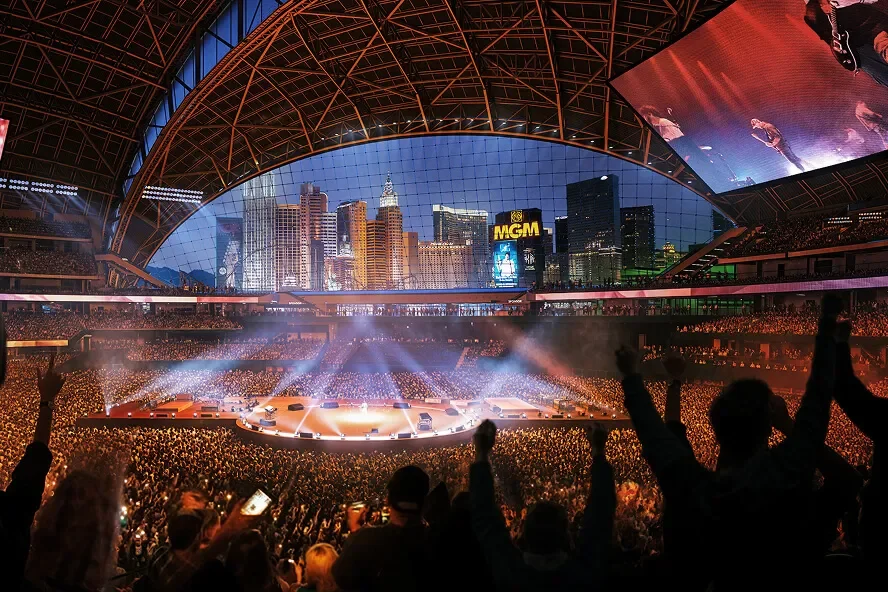
Las Vegas Ballpark Construction Rendering | The Athletics
The bottom line
The A’s Vegas ballpark is trying to be three things at once:
A modern MLB stadium with intimate sightlines and a small but loud crowd.
A Strip showpiece, with a cinematic window to Las Vegas Blvd and a giant in-stadium screen.
A multi-event, climate-controlled venue that keeps Vegas conventions, rodeos, concerts, and one-off spectacles inside its calendar.
Whether that mix works will shape not just the future of the A’s, but how other teams think about building smaller, more premium stadiums in destination cities.
If you only remember one sentence:
The Las Vegas ballpark is a $2-billion bet that 33,000 people will want to watch baseball— and a lot of other events—inside a futuristic jewel box in the middle of the Strip.